Mivagyn vaginal tablets: clinical study on vaginal pH and flora
Key findings: In a clinical study involving 20 women, after two weeks of treatment with Mivagyn vaginal tablets, the mean Vulvovaginal Symptoms Questionnaire (VSQ) score decreased from 9.22 to 0.61 (p<0.001). Complete remission of the VSQ score was observed in 65% of participants, and no adverse events were recorded.
Vaginal health depends on a delicate balance between the vaginal microbiota, mucosal hydration and pH. A Lactobacillus-dominated microbiota contributes to lactic acid production and helps maintain an acidic vaginal environment that discourages the growth of opportunistic microorganisms.
When this balance is disrupted, symptoms may include:
- Itching;
- Burning;
- Irritation;
- Vaginal dryness;
- Leukorrhea;
- Discomfort during intercourse;
- Increased susceptibility to episodes of vulvovaginitis.
Mivagyn vaginal tablets are a medical device formulated to support the restoration of vaginal microbiota balance and physiological pH. The tablets contain hydrolysed/fermented milk proteins, lactic acid and fructooligosaccharides.
What are Mivagyn vaginal tablets?
Mivagyn is a medical device in vaginal tablet form designed to support the restoration of physiological vaginal pH and microbiota balance.
The formulation contains:
- Hydrolysed/fermented milk proteins, which provide functional support to the vaginal environment;
- Lactic acid, a key component in maintaining physiological acidic pH;
- Fructooligosaccharides (FOS), prebiotics that support the growth of endogenous lactobacilli.
Mivagyn is intended to provide support in cases of vaginal dryness, itching, burning, irritation, altered bacterial flora and the prevention or management of vulvovaginitis, including fungal infections.
Mivagyn clinical study: methodology and study population
In December 2024, Gruppo Farmaimpresa conducted an observational clinical study on Mivagyn vaginal tablets to assess their effects on vaginal health, vaginal microbiota and pH balance, and associated symptoms including dryness, itching, burning and irritation.
The study also explored the potential contribution of the product to the prevention of vulvovaginitis.
The clinical study enrolled 20 women, with a mean age of 40.95 years and an age range of 26 to 61 years.
Assessments were conducted at two time points:
- T0, before treatment;
- T1, after two weeks of treatment.
Clinical outcomes were assessed using the Vulvovaginal Symptoms Questionnaire (VSQ), a validated instrument for evaluating vulvovaginal symptoms. Statistical analysis used a paired t-test after checking data normality. The reported significance level was p<0.001, indicating a statistically significant difference between T0 and T1.
Key clinical results: reduction in VSQ score
The main finding was a reduction in the overall VSQ score after two weeks of treatment.
In the group assessed using the 16-item score:
- Mean VSQ score at T0: 9.22 ± 3.66
- Mean VSQ score at T1: 0.61 ± 1.04
- Mean reduction: 8.61 ± 3.42 points
- Statistical significance: p<0.001
The report also indicates that 65% of participants achieved complete remission of their 16-item VSQ score, while a further 20% recorded a score of three points or less after treatment.
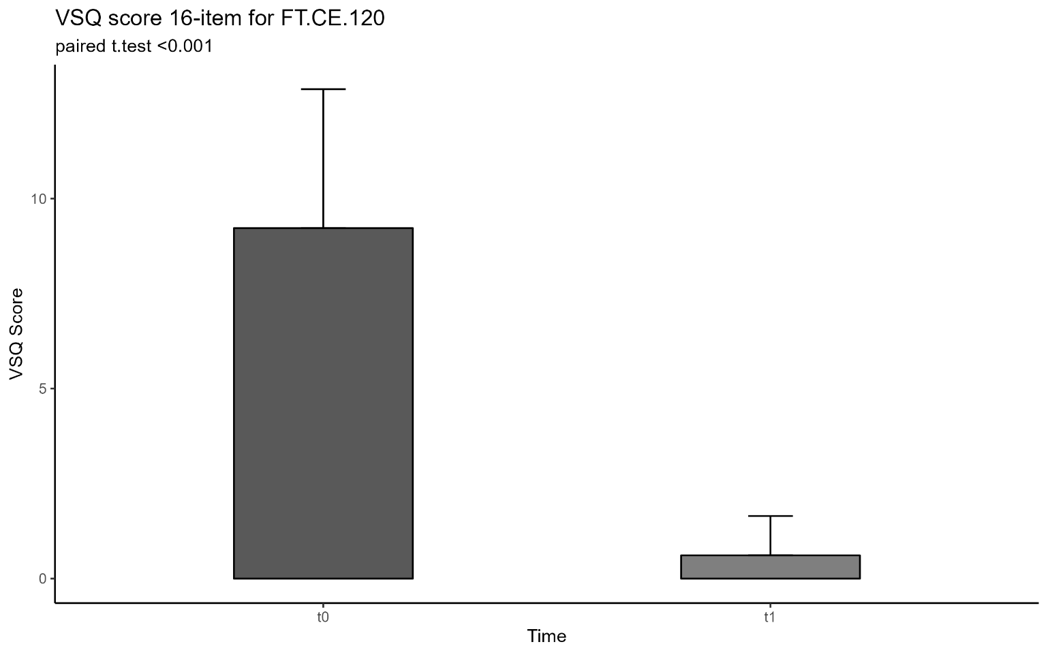
The chart illustrates the reduction in VSQ score between baseline and follow-up. At T0, the mean score indicated clinically relevant vulvovaginal symptoms. At T1, after two weeks of treatment, the score had decreased markedly to very low levels, reflecting an improvement in overall patient-reported symptom burden.
Symptoms assessed: itching, burning, irritation and vaginal dryness
The study also examined responses concerning individual symptoms. Several parameters showed marked reductions after treatment.
The most notable findings included:
- Itching: from 80% at T0 to 5% at T1;
- Burning or stinging: from 65% at T0 to 0% at T1;
- Pain or discomfort: from 70% at T0 to 0% at T1;
- Irritation: from 95% at T0 to 0% at T1;
- Vaginal dryness: from 70% at T0 to 0% at T1;
- Vaginal discharge: from 90% at T0 to 20% at T1;
- Odour: from 75% at T0 to 20% at T1.
These findings are consistent with the intended role of Mivagyn in supporting vaginal balance and relieving symptoms associated with altered vaginal flora and pH.
Mivagyn vaginal tablets: B2B and private label opportunities
Mivagyn vaginal tablets offer an opportunity for pharmaceutical companies, distributors and partners seeking ready-to-market gynaecological products or private label projects.
The product is positioned in feminine intimate care, with a focus on:
- Supporting vaginal microbiota balance;
- Restoring physiological vaginal pH;
- Providing support in cases of vaginal dryness;
- Alleviating itching, burning and irritation;
- Supporting the prevention and management of bacterial, fungal or yeast-associated vulvovaginitis.
To learn more about clinical research and manufacturing capabilities, explore Gruppo Farmaimpresa’s clinical studies and medical devices.
Conclusions of the Mivagyn clinical study
The observational clinical study of FT.CE.120/Mivagyn showed a statistically significant reduction in VSQ score after two weeks of treatment, alongside improvements in major vulvovaginal symptoms associated with altered hydration and pH imbalance.
The decrease in the mean score from 9.22 to 0.61 (p<0.001), complete remission in 65% of participants and the absence of recorded adverse events provide clinical data supporting Mivagyn’s positioning in the gynaecological market, particularly for distribution and private label projects. These observational findings should be interpreted in the context of the small study population and short follow-up.
Looking for a gynaecological medical device supported by clinical data for your distribution or private label project?
Gruppo Farmaimpresa supports companies and partners in the development, manufacturing and regulatory positioning of medical devices, food supplements and dermocosmetics.
References
- Erekson E.A. et al. The Vulvovaginal Symptoms Questionnaire: a questionnaire for measuring vulvovaginal symptoms in postmenopausal women.
- France M. et al. Towards a deeper understanding of the vaginal microbiota.
- Miller E.A. et al. Lactobacilli Dominance and Vaginal pH.