

Oralia Oral Spray: What It Is Used for in Oral and Throat Irritation
Throat irritation, redness of the oral mucosa, mouth ulcers, sensitive gums, and oral discomfort are common problems that may occur during flu-like illnesses, oropharyngeal infections, dental treatments, or the use of orthodontic appliances and dental prostheses. These conditions may cause pain, difficulty swallowing, and increased sensitivity of the oral mucosa, affecting everyday comfort.
The mucous membranes of the mouth and throat are continuously exposed to irritants, bacterial proliferation, and minor trauma. For this reason, specific formulations may be useful to support oral hygiene and protect irritated mucous membranes.
Oralia is an oral spray formulated as a medical device to support the specific hygiene of the oral cavity and throat. It is intended for use in cases of irritation and redness of the gingival and oropharyngeal mucosa. Its formulation contains chlorhexidine, aloe vera, hyaluronic acid, tea tree oil, bisabolol, and essential oils with soothing and protective properties.
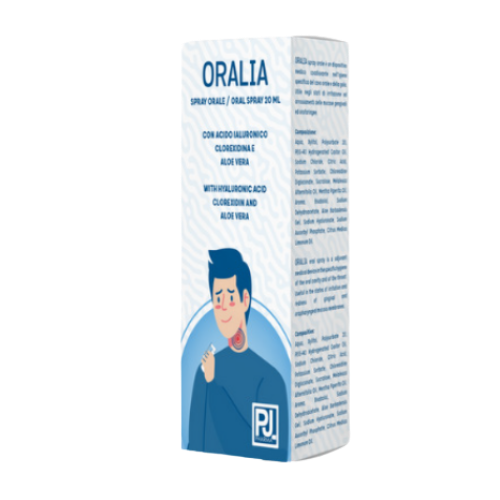
Thanks to its spray formulation and its protective and hygiene-supporting ingredients, Oralia provides localized support in conditions associated with throat and oral irritation.
Causes and Symptoms of Oral and Throat Irritation
Irritation of the throat and oral mucosa may have different causes and may present with symptoms of varying duration and intensity.
The most common conditions include:
- pharyngitis;
- tonsillitis;
- mouth ulcers and oral ulcerations;
- gingivitis;
- irritation caused by orthodontic appliances;
- lesions caused by dental prostheses;
- redness of the oropharyngeal mucosa.
These problems may be associated with viral or bacterial infections, alterations of the oral microbiota, mechanical friction, reduced saliva production, or increased mucosal sensitivity.
The most common symptoms include:
- throat pain and burning;
- redness of the oral cavity;
- discomfort when swallowing;
- gum irritation;
- sensitivity of the oral mucosa;
- small lesions and ulcerations.
When irritation persists, products that help protect the mucosa and maintain proper oral hygiene may be beneficial.
The directional spray applicator also allows localized application directly to irritated areas of the mouth and throat.
Chlorhexidine and Tea Tree Oil: Antiseptic Action and Oral Protection
The main ingredients in Oralia include:
- chlorhexidine digluconate;
- Melaleuca alternifolia oil, or tea tree oil;
- peppermint oil.
Chlorhexidine is widely used in oral hygiene products because of its antiseptic properties and its ability to help control bacterial proliferation in the oral cavity.
Tea tree oil is used to support oral hygiene and for its purifying properties, while peppermint oil provides a fresh and pleasant sensation.
Oralia provides a localized antiseptic and antibacterial action on the oral mucosa, gums, and throat.
Hyaluronic Acid, Aloe Vera, and Bisabolol: Soothing and Protective Action
The formulation of Oralia also contains ingredients with emollient and protective properties that support the wellbeing of irritated oral tissues.
These include:
- hyaluronic acid;
- aloe vera;
- bisabolol.
Hyaluronic acid helps maintain hydration and protection of the mucosa, improving the comfort of irritated or sensitive areas.
Aloe vera provides a soothing and emollient action in cases of redness and sensitivity of the oral mucosa, while bisabolol is known for its calming and protective properties.
This combination makes Oralia particularly suitable for conditions associated with lesions, ulcerations, and irritation of the oral cavity.
Scientific Evidence on Oral Irritation, Sore Throat, and Functional Ingredients
Irritation of the oral cavity and throat may be associated with pharyngitis, tonsillitis, mouth ulcers, gingivitis, and inflammation of the oropharyngeal mucosa. In these conditions, the mucosa may become more sensitive and vulnerable, causing pain, burning, redness, and difficulty swallowing.
Scientific research has therefore examined topical formulations containing antiseptic, soothing, and protective ingredients that may support the wellbeing of the oral mucosa.
A clinical study indexed in PubMed evaluated the effectiveness of a spray containing chlorhexidine gluconate in patients with acute viral pharyngitis. The study reported an improvement in pain and oropharyngeal symptoms in treated patients compared with placebo, suggesting that locally applied spray formulations may contribute to symptom control and throat comfort.
Hyaluronic acid has also been studied for its topical use in oral ulcers and mucosal lesions. A review published in PubMed Central highlighted its potential role in maintaining mucosal hydration and supporting tissue repair. Hyaluronic acid may also help form a protective barrier over irritated mucosal surfaces.
Further scientific evidence has assessed the use of aloe vera in oral mucosal disorders. A systematic review and meta-analysis published in 2025 examined its effectiveness in oral mucositis and reported potential benefits in reducing inflammation, pain, and lesion severity.
These findings support the use of spray formulations containing antiseptic, protective, and soothing ingredients to promote the wellbeing of the oral cavity and throat in cases of redness, mouth ulcers, gum irritation, and oropharyngeal inflammation.
Looking for an Oral Spray for the Throat and Oral Cavity Ready for Market or Available for Private Label?
We are a certified manufacturer of medical devices, food supplements, and cosmetic products and develop innovative formulations for oral and oropharyngeal wellbeing.
Oralia is available for B2B and private-label projects, with comprehensive formulation, regulatory, and manufacturing support.
Sources:
- Cingi C, Songu M, Ural A, Yildirim M, Erdogmus N, Bal C. Effects of chlorhexidine/benzydamine mouth spray on pain and quality of life in acute viral pharyngitis: a prospective, randomized, double-blind, placebo-controlled, multicenter study. Ear Nose Throat J. 2010 Nov;89(11):546-9. PMID: 21086279.
- Cássia-Santos D, Santos CKC, Fernandes LT, Carvalho GQ, de Aquino SN, Lemos CAA. Effectiveness of Aloe vera in the treatment of oral mucositis: a systematic review and meta-analysis of randomized controlled trials. Int J Oral Maxillofac Surg. 2025 Jul;54(7):590-597. doi: 10.1016/j.ijom.2025.01.015. Epub 2025 Feb 6. PMID: 39909775.
- Kapoor P, Sachdeva S, Sachdeva S. Topical hyaluronic Acid in the management of oral ulcers. Indian J Dermatol. 2011 May;56(3):300-2. doi: 10.4103/0019-5154.82485. PMID: 21772592; PMCID: PMC3132908.